


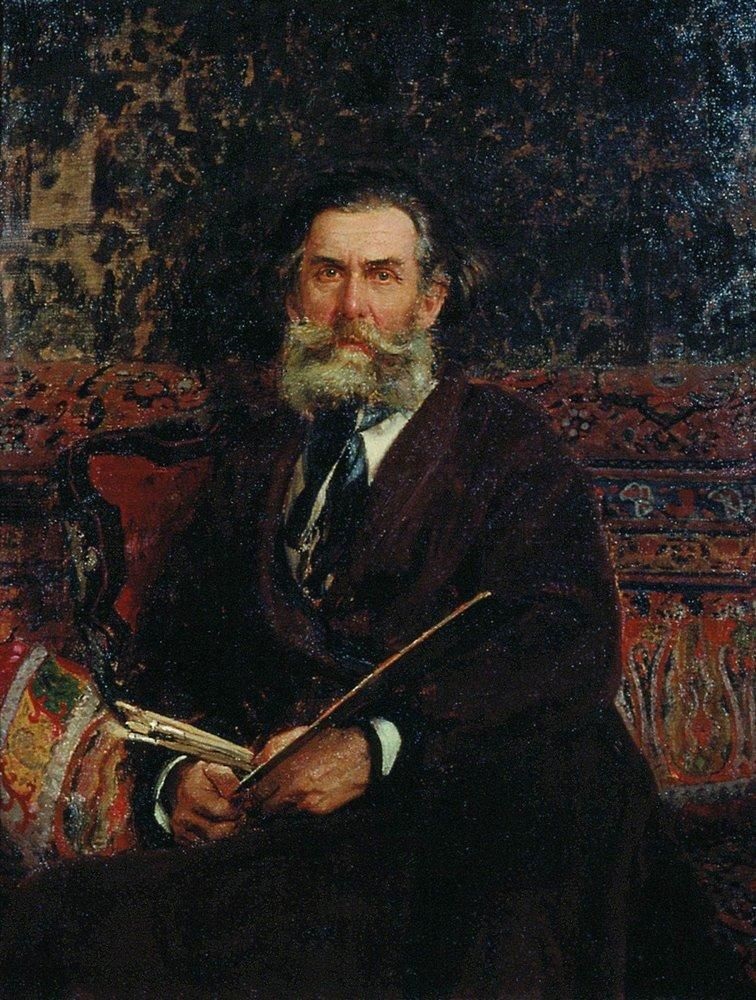
Alexei Petrovich Bogolyubov was a 19th century Russian marine artist, naval officer, and a brilliant master of landscape and naval battle scenes. Bogolyubov called himself a “sailor-artist”, but he was a much more vivid and multifaceted personality.
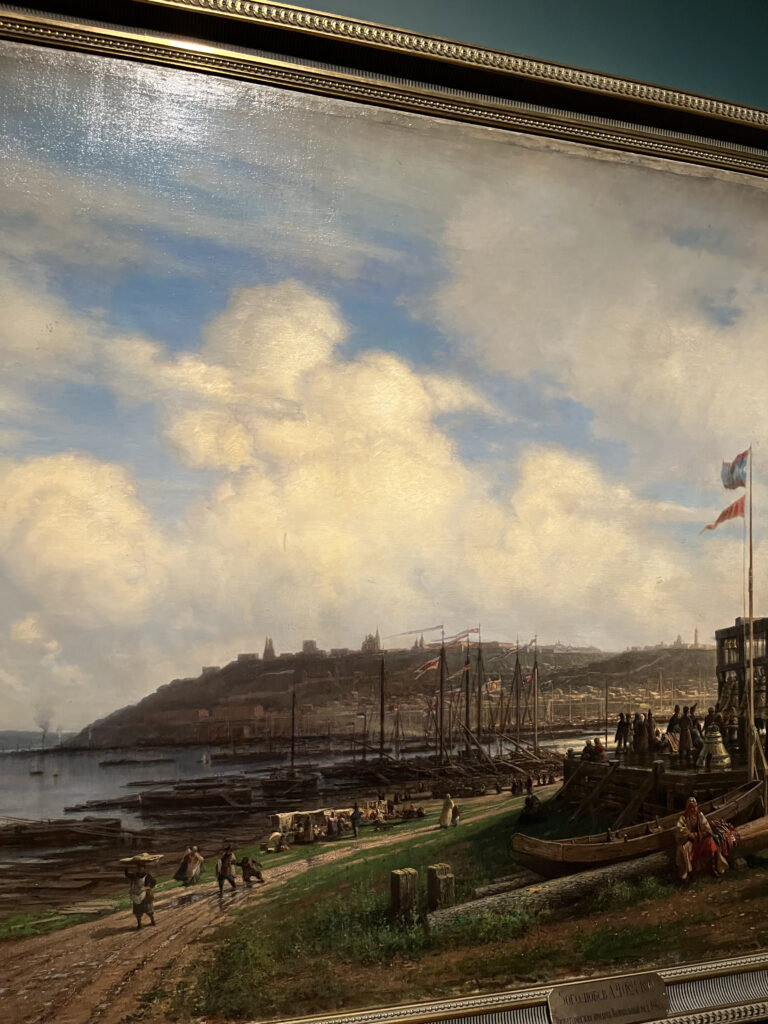
Alexei Petrovich Bogolyubov was born on March 16, 1824 in the village of Pomeranje, former Novgorod province. His father was Colonel Pyotr Gavrilovich Bogolyubov, a veteran of the Patriotic War of 1812, and his mother was Fekla Alexandrovna Radishcheva, daughter of the famous Russian revolutionary-democrat of the 18th century, A. N. Radishchev.
He was brought up in the marine corps, served as an adjutant to Vice-Admiral Alexander Alekseevich Durasov. While he was still a cadet, Bogolyubov began to paint.
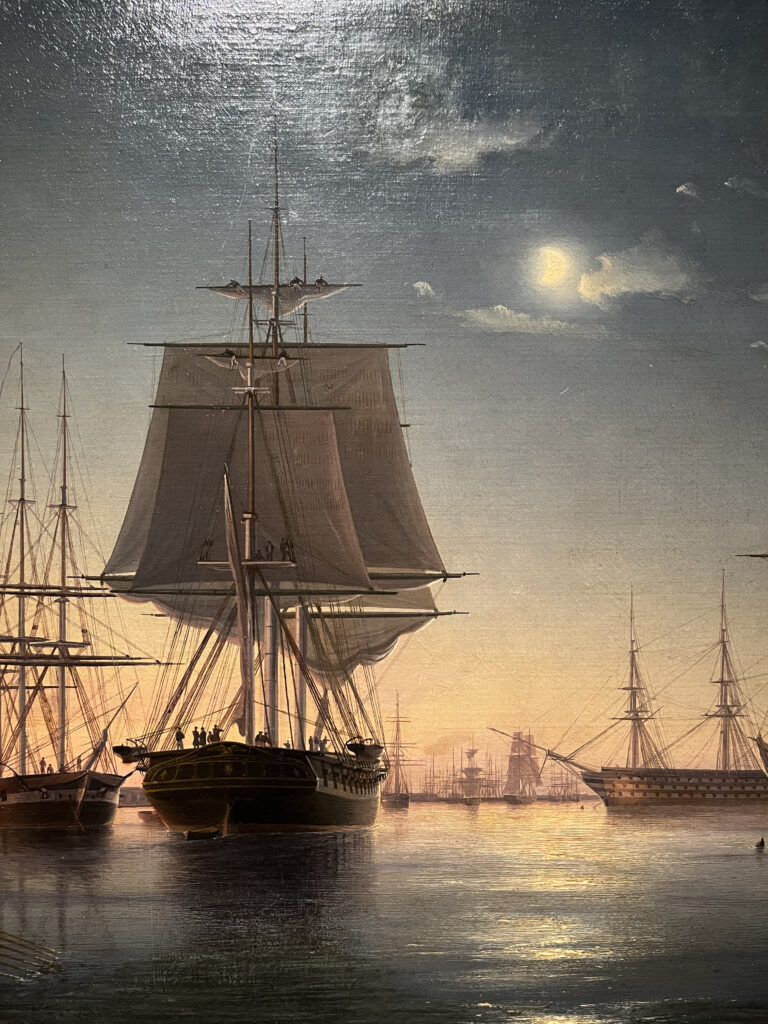
In 1849 he was among the officers of the ship “Kamchatka” on which Duke Maximilian of Leuchtenberg traveled to Madeira. After getting acquainted with Bogolyubov’s paintings, the duke advised the young officer to devote himself to art.
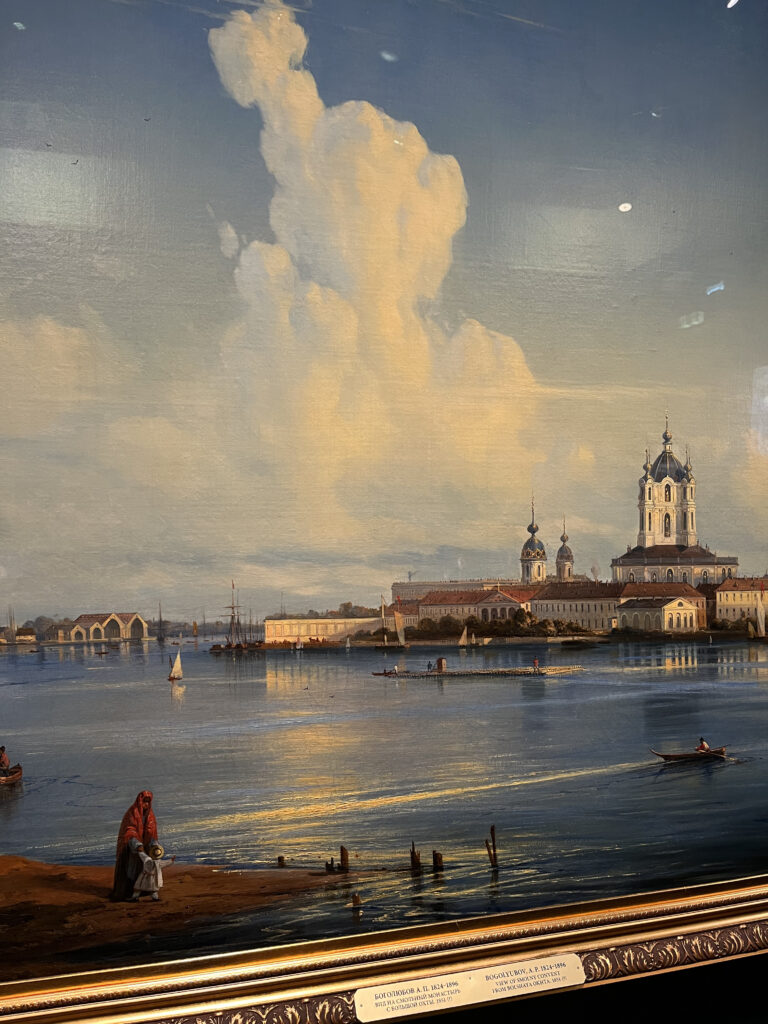
In 1850 Bogolyubov entered the Academy of Arts. He drew attention to himself with two views of the Kronstadt harbour and the painting “Flooding in the Kronstadt harbour in 1824” In 1852 Bogolyubov received the second gold medal for three paintings: “View of the Smolny Monastery from the Okhta”, “Battle of the brig “Mercury” with two Turkish ships” (from the Turkish War of 1828) and “Departure of H.I.H. Duke Maximilian of Leuchtenberg from Lisbon”.
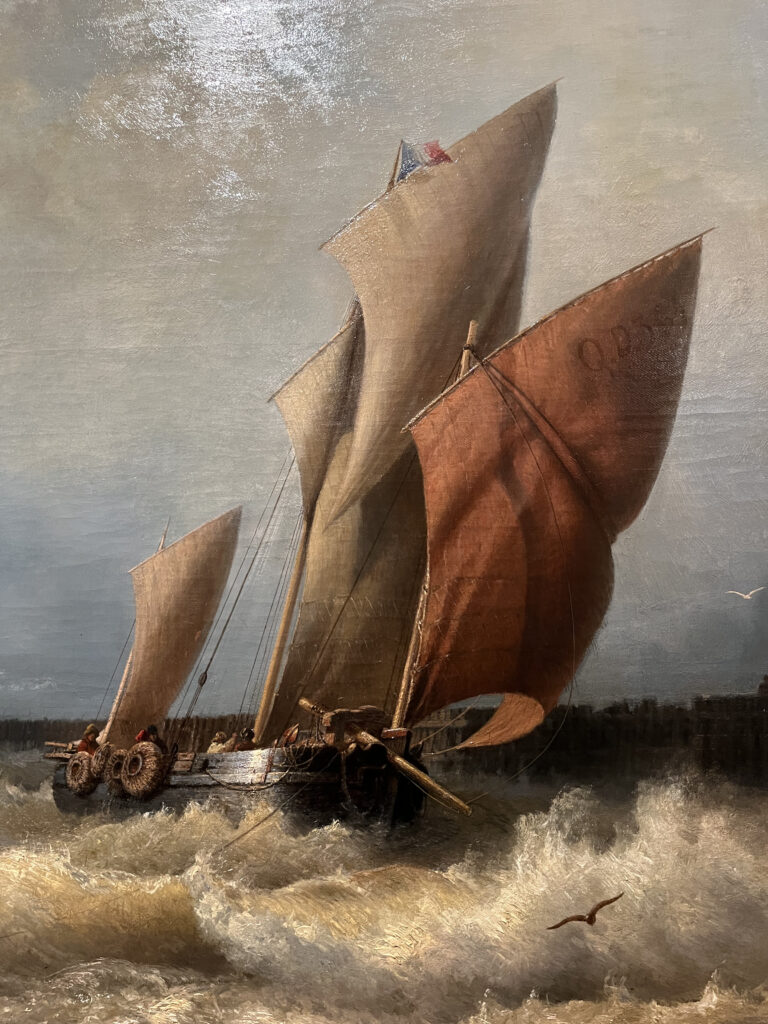
Bogolyubov left the Academy in 1853 with the first gold medal and was appointed painter of the main naval staff. After leaving the naval service, he travelled around Europe for seven years. In Geneva he took the advice of the famous Calam; in Paris he worked in the workshop of Izabe; for two years he studied with Andreas Aachenbach.
In 1856 Bogolyubov visited Constantinople, the Danube and Sinop, with the aim of writing several studies for the paintings commissioned to him by Emperor Nicholas Pavlovich. Upon his return, he received the title of academician, and in 1860 – professor of painting. At the same time Bogolyubov arranged in the halls of the Academy an exhibition of his works in favour of widows and orphans of artists. At this exhibition, the public paid special attention to the paintings from the history of our fleet, commissioned by the Emperor, especially “Sinop” and “Kermes in Amsterdam”.
Emperor Alexander II commissioned Bogolyubov to paint the history of the Peter the Great’s fleet. The last Turkish war, in its Black Sea and Danube exploits, was also reflected in Bogolyubov’s work. On behalf of the hydrographic department of the Maritime Ministry Bogolyubov sailed along the Gulf of Finland and skerries, depicted the shores and measured the places of ports and skerries. The same atlas was also made by him in the Caspian Sea. In 1871 Bogolyubov painted several frescoes for the Orthodox Church in Paris. In the same year he gave the Academy up to 225 etudes in oil paints and 800 sepia drawings and watercolours.
For the younger Romanovs, the future Emperor Alexander III and his wife Maria Feodorovna, Bogolyubov was not only a friend, but also a teacher and tender guardian.
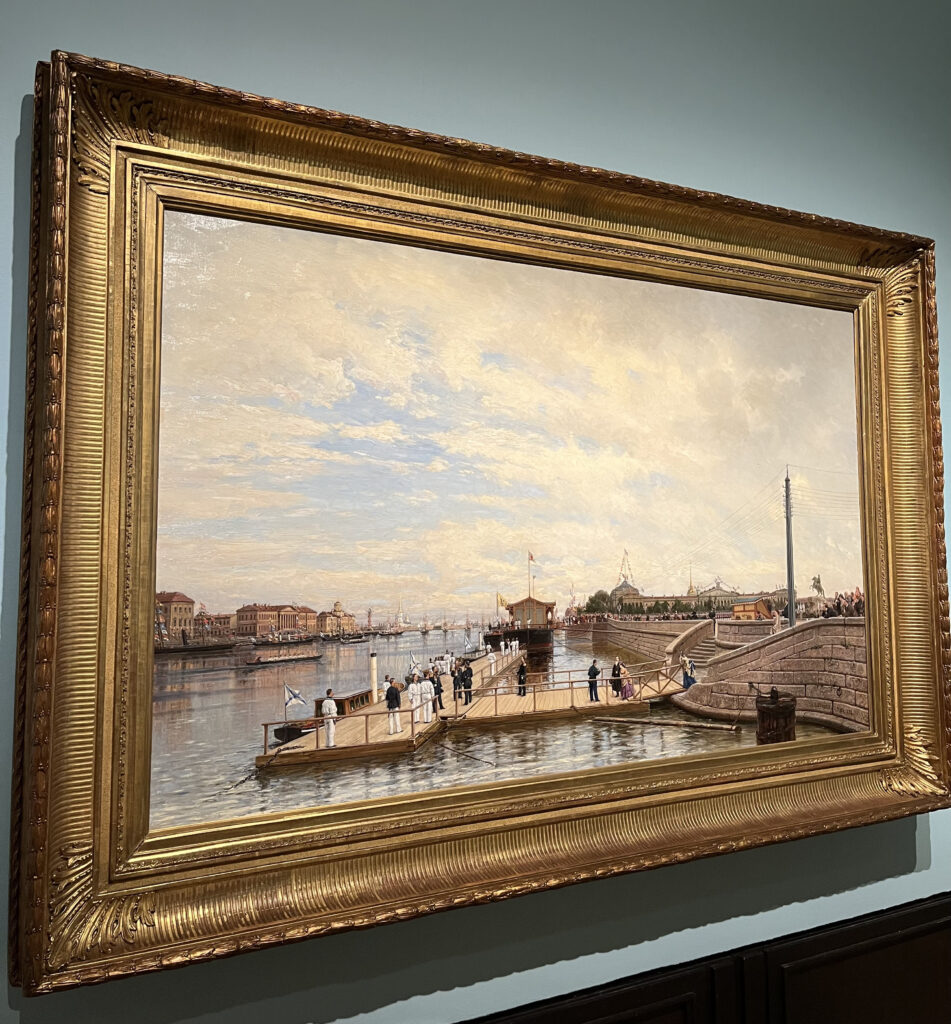
The artist, who still fulfilled the commissions of the grandfather, Emperor Nicholas I, and the father, Emperor Alexander II, was perceived by his grandson, the future Alexander III, as a member of the family.
The interest in Russian history, antiquities and at the same time in Western European painting arose in the heir of Alexander Alexandrovich under the influence of Alexei Bogolyubov.
Bogolyubov is the author of several large-scale series of battle paintings dedicated to the Russian navy from the Peter the Great era to the second half of the 19th century.
In 1860, Alexander II acquired all the paintings of the painter on the Crimean War and ordered a new series of works on the fleet of the times of Peter the Great. Bogolyubov worked for more than 10 years on the creation of paintings of sea battles of the times of Peter the Great (“The Battle of Gangut”, “The Battle at the Island of Ezel”).
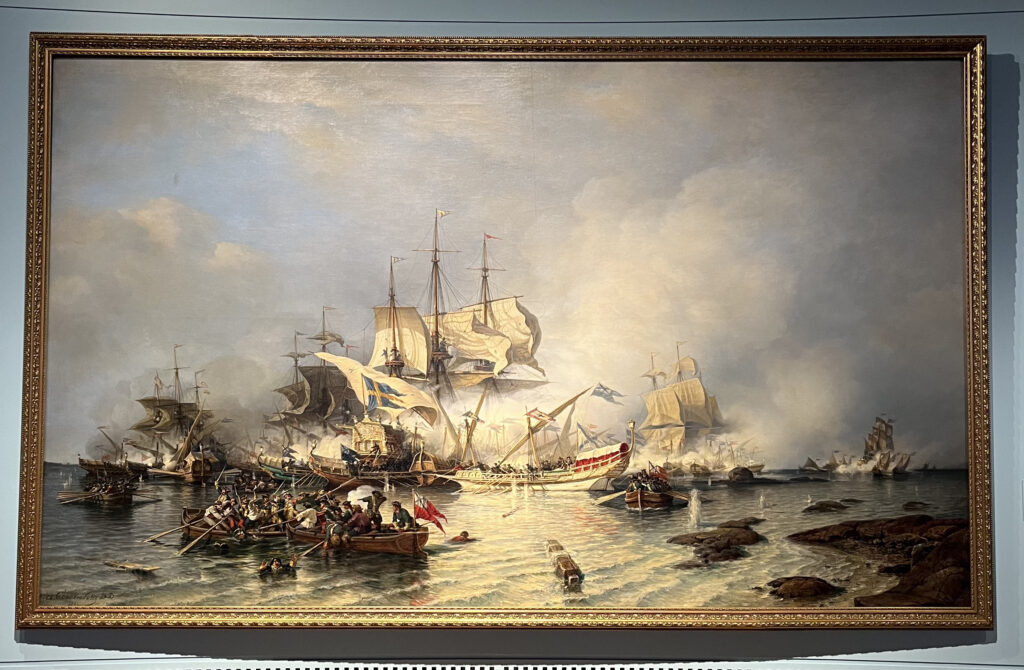
Despite the fact that Bogolyubov was a naval officer, he never took part in battles and was engaged in reconstruction of battles on the basis of eyewitness descriptions, maps and iconographic materials. His works remain unrivalled in terms of historical authenticity, accurate depictions of ship rigging and battle details.
Bogolyubov is the most European among the Russian landscape painters of his time. He studied and worked in Italy, Switzerland and Germany, and lived in France for many years.
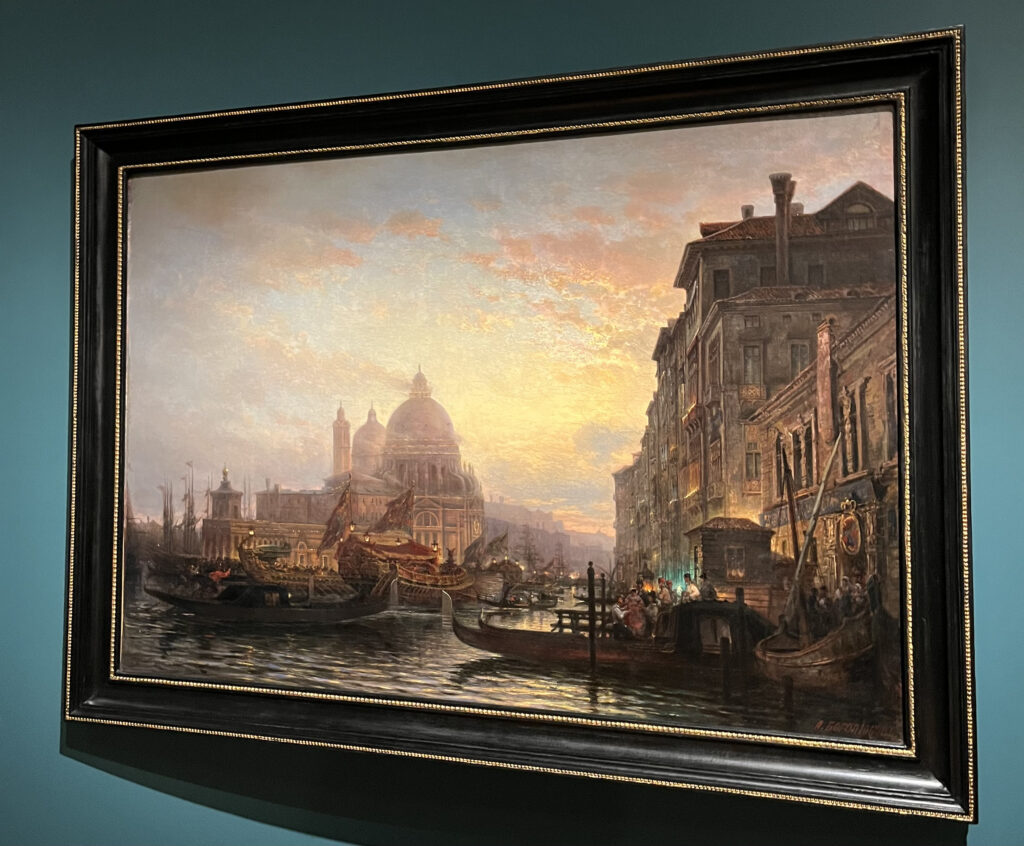
Since 1874 Bogolyubov actually moved to France due to illness, travelling to Russia on a daily basis. In Paris he became one of the first emissaries of Russian culture. His studio served as a place of merry celebrations, meetings and exchange of ideas between French and Russian artists, a center of attraction for young scholarship holders of the Russian Academy of Arts. Repin, Polenov, Shishkin, Savitsky, Konstantin Makovsky and other future outstanding artists were under his tutelage.
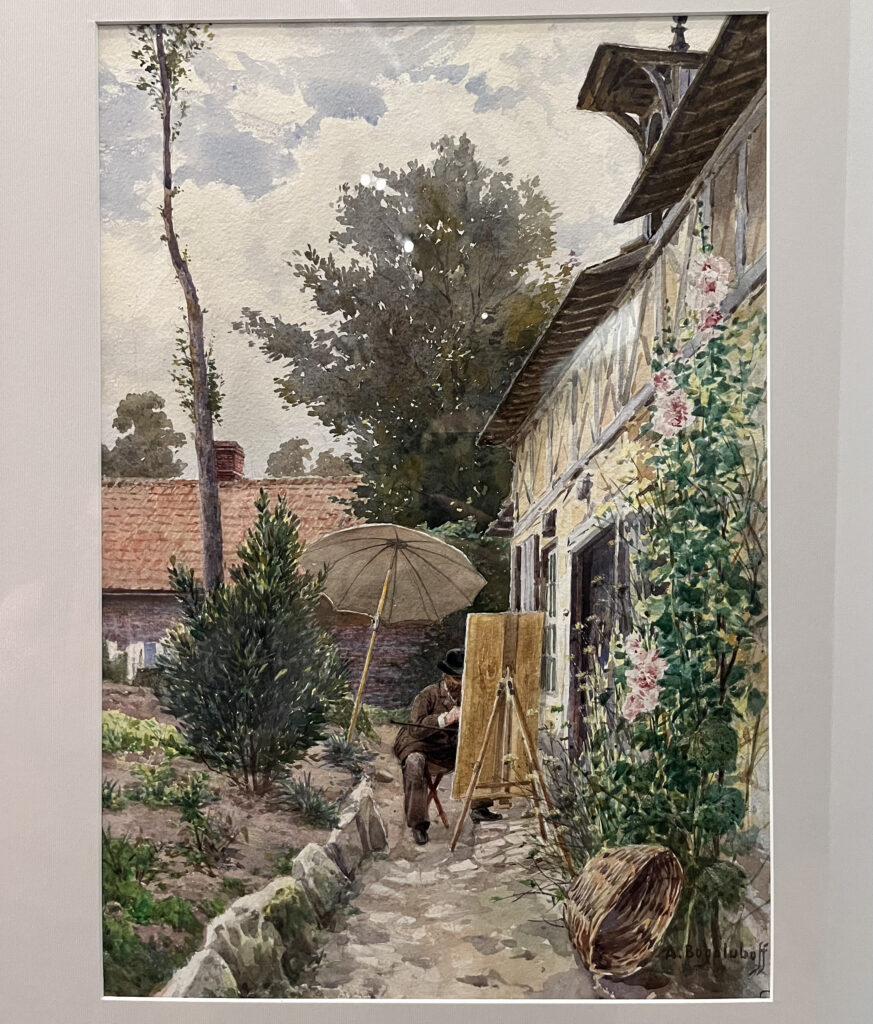
In Saratov he arranged a museum named after Radishchev, to whom he is a grandson. Bogolyubov’s works are in the collections of Russian museums, in particular in the Tretyakov Gallery – “Golden Horn”, “The Mouth of the Neva”, “Summer Night on the Neva at the Vzmorye” and others.