


Fifty kilometres from Ljubljana, the capital of Slovenia, there is picturesque Lake Bled. The lake shore is decorated with a majestic castle, and in the centre of the lake there is a small island with the Church of the Assumption of the Mary on it.
‘Emerald’ lake
Lake Bled is one of the most popular places in Slovenia. The lake has another name – ‘Emerald’. Surrounded by high mountains, Lake Bled was formed on the site of a retreating glacier. It is fed by spring water, rainfall and warm springs – that is why Bled only freezes in the freezing winter, and in July the water warms up to 24 degrees Celsius. The tiny lake is only 2.12 kilometres long and 1.30 kilometres wide. On the shores of the lake, among wooded hills, the town of the same name is situated, and above it, on a 130-metre high cliff, stands a thousand-year-old castle.
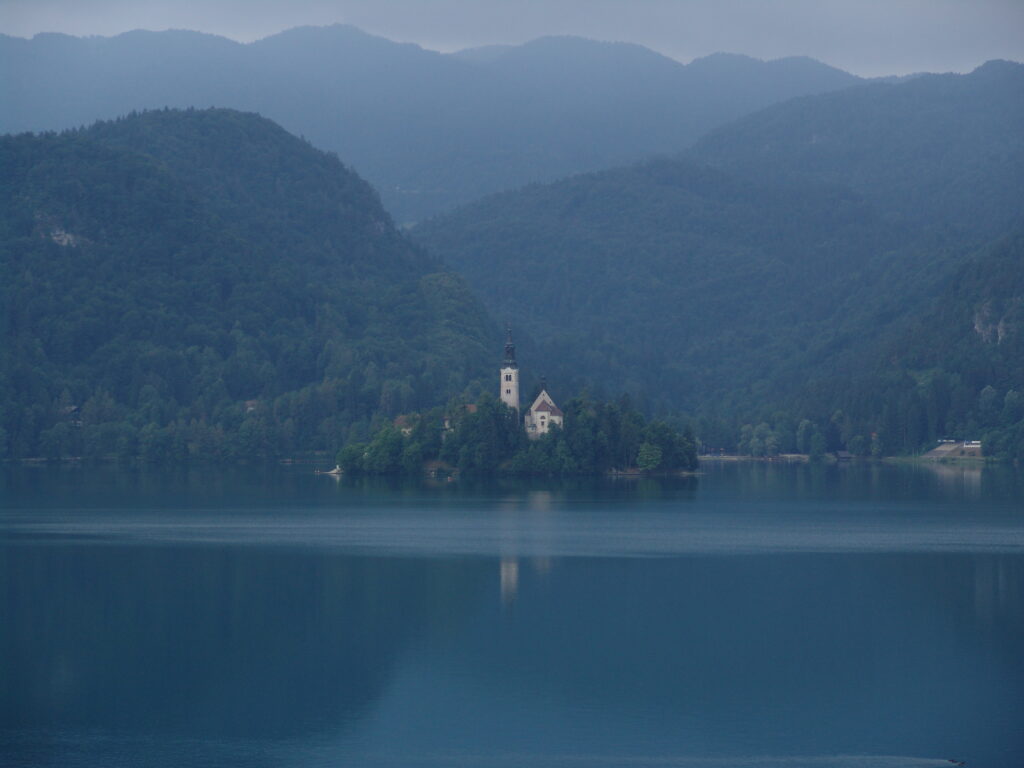
The church on the island of Bled is today one of the most popular marriage venues. The island can only be reached by the wooden boat ‘Pletna’, a canopy boat driven by a standing oarsman.
In the centre of the island is the Church of the Assumption of the Mary. A staircase of 99 steps leads from the marina to the entrance of the temple. According to the local tradition, the groom must overcome the 99 steps leading to the temple, holding his future wife in his arms. The bride must remain silent. It is believed that the newlyweds’ wish will come true after this.
The Church of the Assumption of the Mary, founded in the 17th century, is a monument of art: here you can find Gothic frescoes and Baroque finishes.
Lake Bled attracts tourists at any time of the year. In spring, summer and autumn, health resorts are open, while lovers of active recreation can enjoy hiking, horseback riding, sport rowing and fishing. When the ‘water’ and ‘hiking’ seasons close, winter sports enthusiasts come to Bled.
The Legend of Lake Bled
There are several folk legends about the origin of Lake Bled, here is the most common one.
According to legend, there was once a lush valley with blooming green meadows inhabited by fairies on the site of the present-day Lake Bled. In the centre of the valley there was a small hill and a rock on which the fairies danced at night. One afternoon the local shepherds were grazing their sheep in the valley and the sheep were eating the grass around the rock. This angered the fairies, who were afraid that the sheep would eat all their grass. The irritated fairies told the shepherds to keep the sheep away, warning that if they did not obey, they would build a barrier around the hill so big that no one without wings could reach it. But the farmers ignored this warning.
Soon the sheep ate almost all the grass, leaving only bare ground. One night, while the fairies were dancing, the youngest and most beautiful of them slipped and fell, breaking her foot on the hard ground where soft green grass had once grown. The angry fairies called upon the mountain springs and streams to flood the valley and form a lake. When the water rose, only the hill where the fairies had danced remained unflooded, becoming an island among the turquoise waters.
Tragic legend of the bells
Six centuries ago, Baron von Craig ruled in a castle above a lake. He led an unremarkable life: he had no military honours and was not respected by his servants. The Baron’s only and main treasure was his beautiful wife Anna. Immersed in family happiness, he did not notice the impending disaster: the peasants, displeased with the high level of taxes, revolted. As a result of the revolt, the castle was looted by robbers and all the men of the castle, including the baron, were killed.
Before the attack, the baron managed to hide his wife in a local village. Anna, overcome with grief, decided to devote herself to the service of God. She gathered all the gold and silver she had, ordered them to be melted down and cast a bell in memory of her dead beloved. She planned to place the bell in the chapel on the island of Bled, where she prayed daily after her husband’s death.
However, when the bell was being carried across the lake, a storm arose, the boat capsized and the bell sank. So the poor widow went to a convent in Rome. After her death, the Pope heard her story and ordered a new bell to be made in the nun’s honour, to be placed on the steeple of the church on the island of Bled. This gift from the Pope, made in Padova in 1534, still sounds over the lake today.
The locals believe that you can make a wish under the bell. What the island bell hears, the underwater bell will also sing, which means that the wish will definitely come true.