


Champagne glasses add a touch of glamour and a sense of celebration to any event, but did you know that different types of champagne glasses can affect the fizz, flavor and aroma differently? The iconic “chalet” (cremagne), the elegant flute and the classic tulip are all types of champagne glasses, each bringing its own unique style and allowing you to enjoy your drink in a different way.
“Coupe”
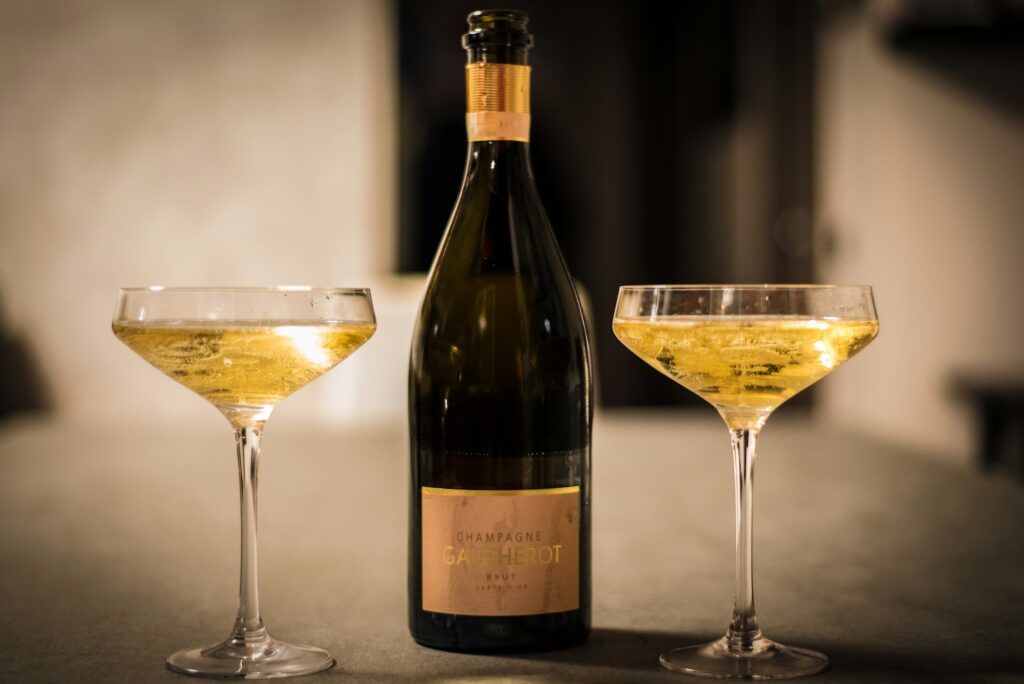
Champagne coupes, also known as Champagne saucers, were the original champagne glasses specifically designed to serve fizzy wine. They were popular in England in the early 1800s and are one of the oldest styles of champagne glasses.
A coupes is a champagne glass with a wide, shallow bowl and a short, elegant stem. This particular iconic round shape is rumored to be modeled after the chest of the young 18th century French queen Marie Antoinette.
Coupe is the oldest of all types of champagne glasses. However, now for classic champagne, such a glass is not very suitable due to the fact that the large area of contact with air leads to a loss of flavor and rapid disappearance of bubbles.
However, while remaining synonymous with style and luxury, the coupe shape allows you to watch the joyful dance of bubbles in the glass. When drinking from a “coupe,” it is best to hold the glass either by the rim or the top of the stem. This way the champagne will be optimally chilled, improving the overall flavor and enjoyment of the sparkling wine.
“Flute“
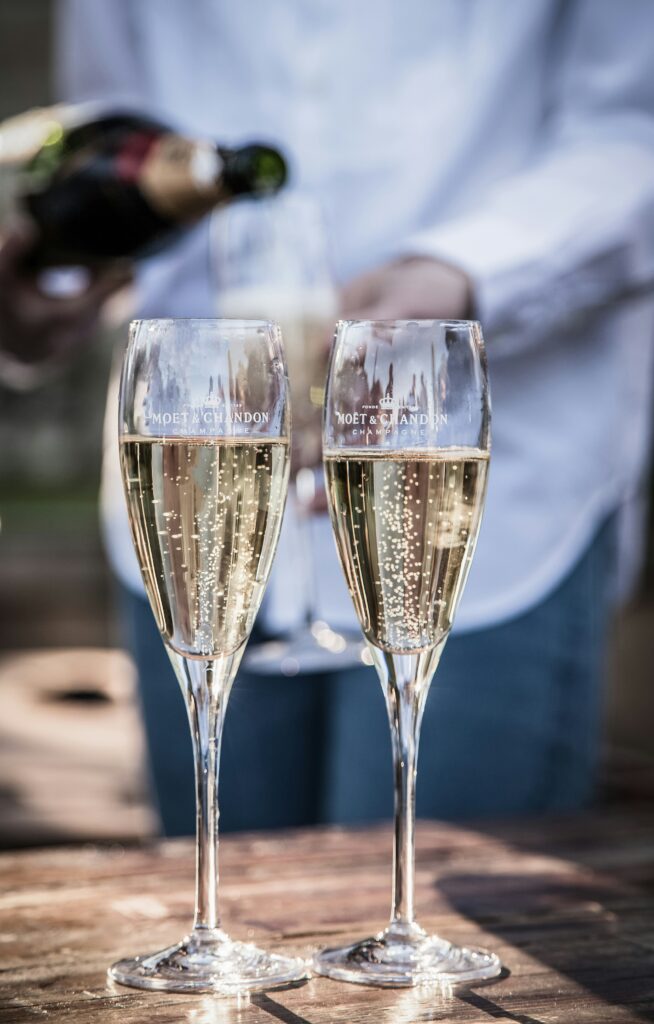
“A flute, also known as a flute or fougère, is an oblong tall glass on a thin stem.
Over the years, as sparkling wine became more popular and accessible to more than just the upper elite, other styles of champagne glasses emerged. By the 1920s, the traditional “coupes” had fallen out of use and were replaced by thinner champagne flutes.
The signature tall and narrow shape of the flutes allows the flavor and carbonation of the wine to be better preserved. The center notch in the bottom of the glass also serves as a place for the bubbles to cluster and help them rise smoothly to the top.
Despite the similar subtle design, there are different variations of the flutes. Here are some of the most common styles, from traditional to more unusual champagne flutes:
- Classic champagne flutes: classic flutes like the Riedel Vinum glasses have a long conical shape. This helps keep the wine fizzy and concentrates the bubbles in the center of the glass.
- Trumpet champagne flute: A “trumpet” glass is a variation of the classic design, it curves outward to form a trumpet shape at the opening. Its design concentrates the bubbles at the rim, maintaining a delightful fizzy texture.
- Square champagne flutes: As the name suggests, these modern glasses have a square shape without the classic tapered opening. This allows for a more even distribution of bubbles that fizz faster.
- The stemless Champagne flute: the simpler stemless glasses are a modern interpretation of the classic fougère. The conical shape keeps the wine carbonated and flavorful, but because there is no stem, the wine warms more quickly in your hand.
When drinking from a footed flute, it’s best to hold the glass by pinching the top of the stem between your thumb and forefinger. This way you won’t warm the champagne with your hands and keep it cold. With stemless flutes, you’ll have to hold the glass by the base, which many people find more convenient, although it does heat up the wine.
“Tulip”
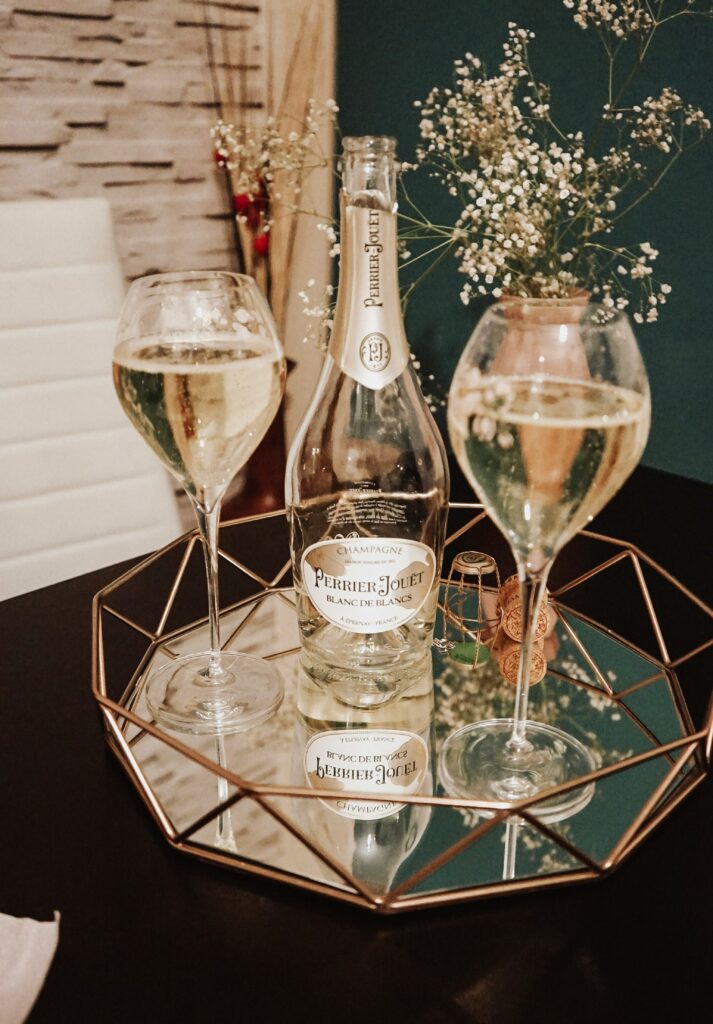
Following the success of champagne flutes in the 1930s, tulip-shaped champagne glasses became popular around the world. Tulip glasses, which get their name from the flower, have a long, narrow stem and an elongated oval shape. They are similar in design to champagne flutes, but have a wider, round center and narrower top.
It is this signature drop shape that traps the flavors inside the bowl and directs them towards the nose. The wider bowl also gives the bubbles more room to aerate and “dance”, but the narrow rim doesn’t allow them to escape easily.
As with the flute and the “coupe”, to keep the champagne at the optimal temperature, it is best to hold the tulip glass by the top of the stem or the base to avoid warming the wine with your hands.