


Many people often confuse three terms: figurehead, rostra and bowsprit. So, today I have decided to tell you what is the difference between them.
Figurehead
A figurehead (bow figure) is an ornament on the bow of a sailing ship.
The tradition of decorating the bow of a ship with a sculptural figure or relief has existed since ancient times.
Located under the bowsprit and pointing forward, it was a symbol of the ship’s power and wealth. They also served as a kind of talisman for the ship’s crew, bringing good luck.
Figurehead it is called because the figure was installed on the bow of the ship, where the head (toilet) was also located. The head was the deck at the bow of the ship and the seats with holes on which sailors sat.
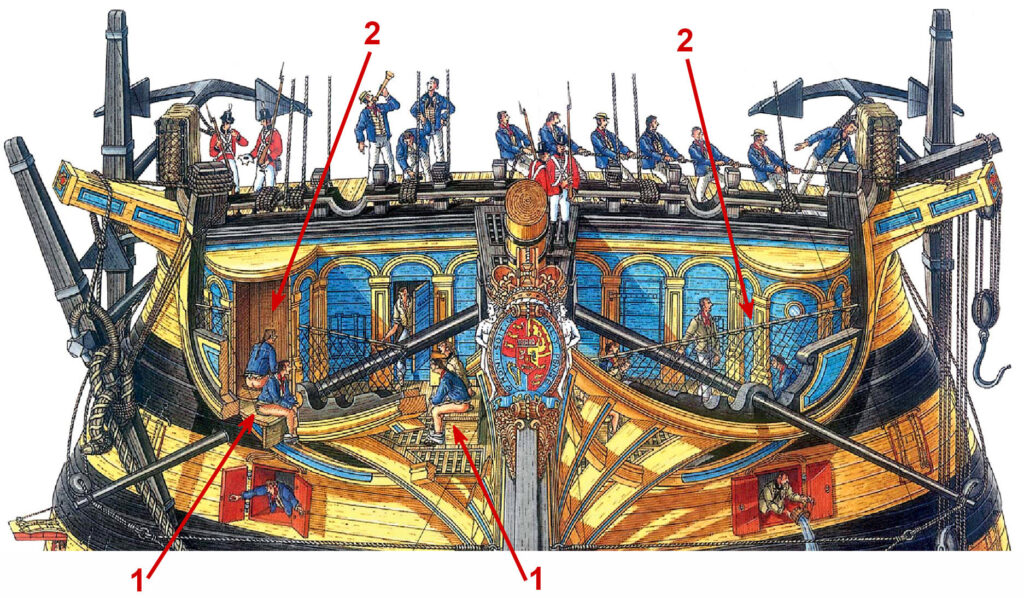
At first, these figures in the form of mythical animals were placed on the bow of the ship, on a special ledge.
They were often placed, especially by Vikings, to intimidate enemies. On the high bows of their drakkars they also placed the high raised heads of dragons. And when these heads emerged from the fog accompanied by roaring battle horns, it made a very frightening impression on the Europeans.
The first figures date back to the year 350, but they flourished between the 16th and 17th centuries. By the middle of the XVI century sculptures are already quite perfect in artistic terms, wood carvers have learned to skillfully transfer the contours of the bodies of these figures. Soon all large sailing ships had incredible sculptures under the bowsprit.
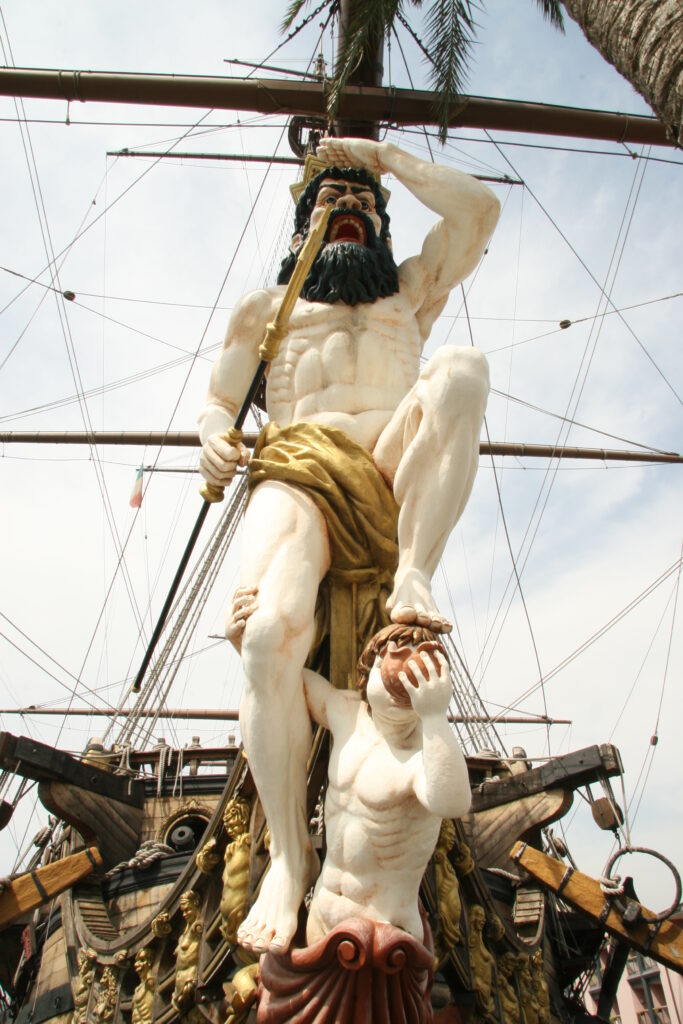
Many bow figures personified in a direct, allegorical or symbolic form the name of the ship, in order to show the name of the ship, which was written on its side and stern – “Unicorn”, “Sea Maiden”, etc., to people who, for the most part, could not read.
A wide variety of figures were used: from ancient Roman emperors and heroes to figures of political figures and even saints.
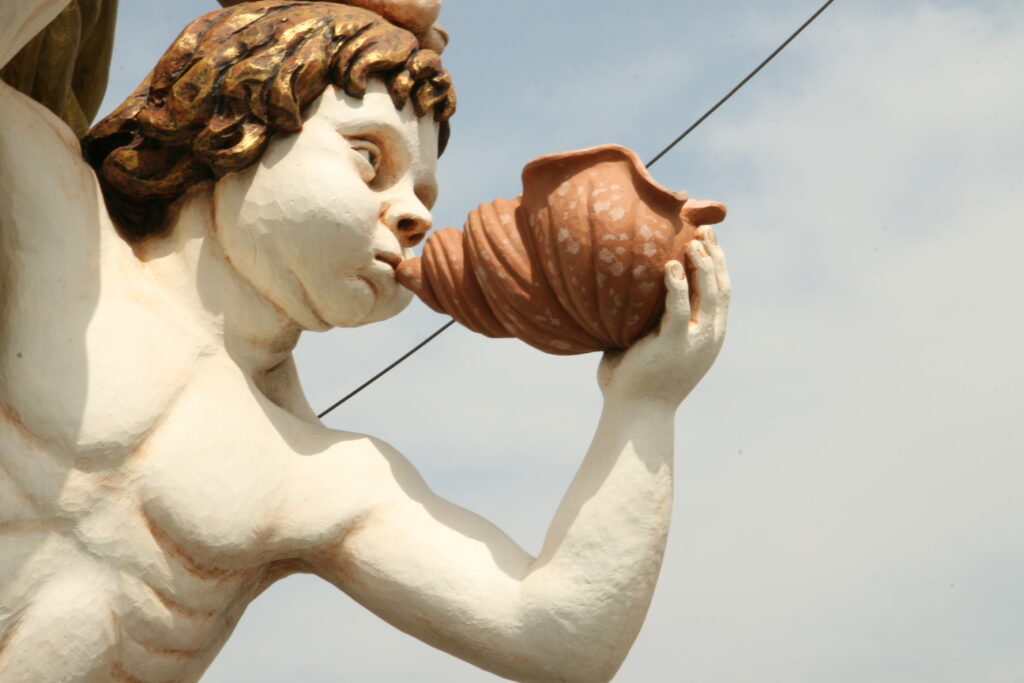
Lions and eagles were also popular figures, as they represent power and strength. Dutch sailors were especially fond of lions, and from them this tradition was adopted in Russia at the time of Peter the Great.
But gradually all these figures were replaced by figures of beautiful women, who served as guardian angels for these ships.
As I wrote earlierthe figure of a naked woman was considered to be an amulet on a voyage.
When the ship served its time, the bow figure was removed and it decorated the walls of buildings, columns, and the master’s or captain’s house. Subsequently, the bow figures ended up in maritime museums.
Rostr (and rostra).
In Russian there are the words rostr and rostra, which should not be confused. Although they both come from the Latin rostrum, – “beak, muzzle, nose of a ship”, there is still a difference between them. The first, the rostrum, was a battering ram on the bow of an ancient Roman ship,often in the form of an animal head or a maiden. It consisted of two large, strongly projecting beams fitted with iron points; they were attached to the front of the warship below sea level and were called beaks. They tried to hit the enemy ships in the side to penetrate them and let them go down.
The second meaning, rostra(Latin rostra – ship’s noses) is also the bow of an ancient warship, but only as a column decoration.
Bows taken off enemy ships were set up in forums in Rome as trophies. Since then, the word “rostra” has referred to the oratorical pulpit and the part of the forum that surrounded it.
Consul Gaius Menius, a plebeian by birth, after the victorious end of the Latin War, installed in 338 BC captured in Ancia rostra on the oratorical tribune. Following his example, Augustus, after the battle of Actium, added the spoils of his victory over Cleopatra’s fleet.
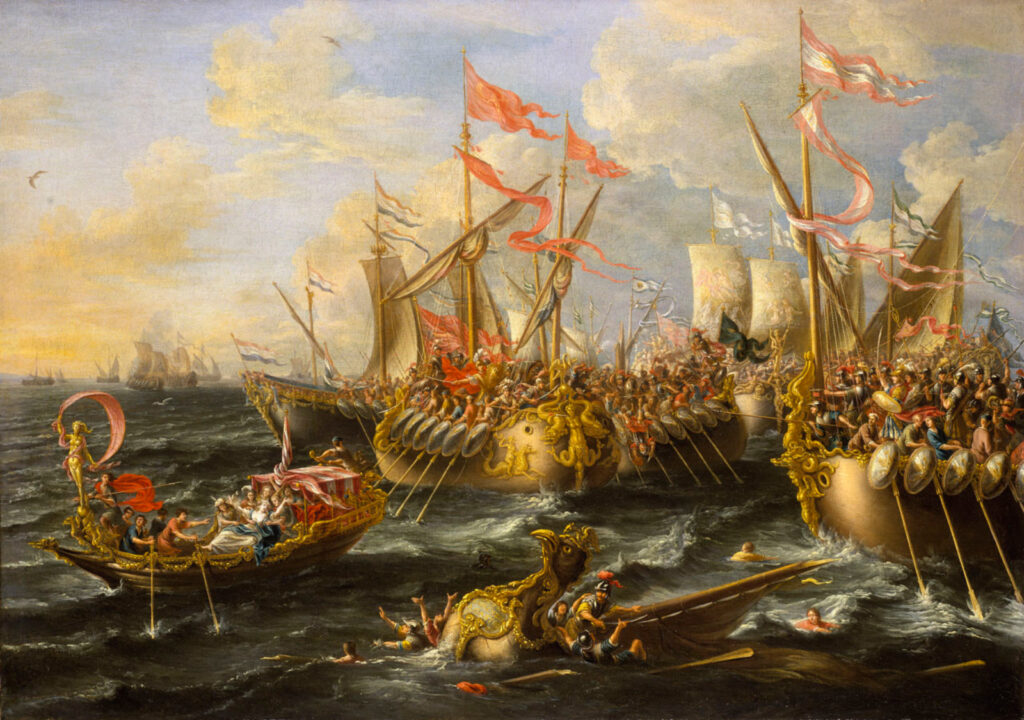
It is noteworthy that in ancient Rome the bow ornament was called rostra, and in ancient Greece – caryatid.
Bowsprit
Bowsprit, boegspriet(Dutch: boegspriet; from boeg – bow + spriet – peak, spit ) – a horizontal or inclined spar protruding forward from the bow of a sailing vessel.
The main purpose of the bowsprit is to increase the sailing ability of the vessel. It is usually fitted with several sails, which allow the vessel to develop greater speed in crosswinds. The angle of the bowsprit is usually between 30° and 36° to the horizon. The bowsprit also provides additional support for the foresail, the rope that holds the mast, and allows the foremast to be set further away from the bow of the vessel, which improves the stability of sailing ships, especially large ones with multiple masts.
Bowsprits vary in length and vessel design. The bowsprit is used to attach the corners of the slanting sails and sometimes the duckbill, an additional beam that extends the bowsprit. More slanted sails can be attached to the ducktail. The slanting sails became popular from the XVI century, as they made it easier to steer the ship and increased its manoeuvrability. Setting slanting sails required less effort and labour than straight sails.