


J Class yachts are perhaps the most beautiful, elegant and powerful sailing boats. The original J Class yachts were built to compete in the America’s Cup.
Unfortunately, however, most of the yachts did not survive the dismantling for metal during World War II. Some of the surviving yachts were later rescued and rebuilt, while others were built by the owners as exact replicas.
Velsheda and Svea are two of the outstanding representatives of the J class. Velsheda is one of the few yachts to survive the war. While Svea was built from scratch from the original designs.
Velsheda
Velsheda is a sailing yacht with a total length of 39.4 metres.
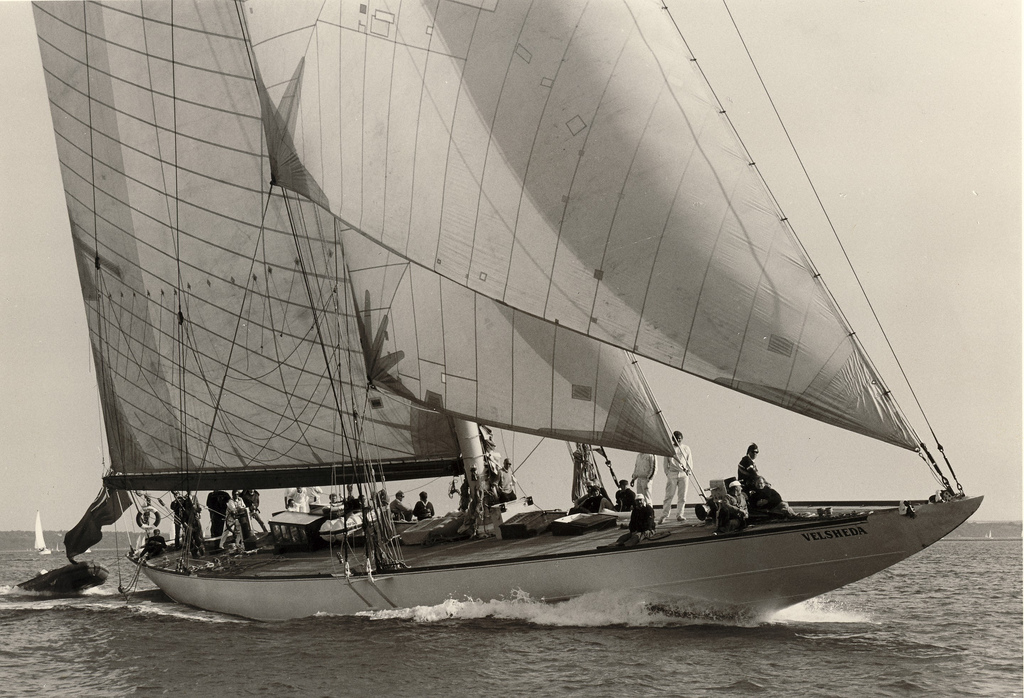
Velsheda JK7 was launched in 1933, ordered by British retail magnate W. L. Stephenson, chairman of the British chain of Woolworth’s shops. The yacht was designed by Charles E. Nicholson and built in Gosport, England, at the Camper and Nicholson shipyard.
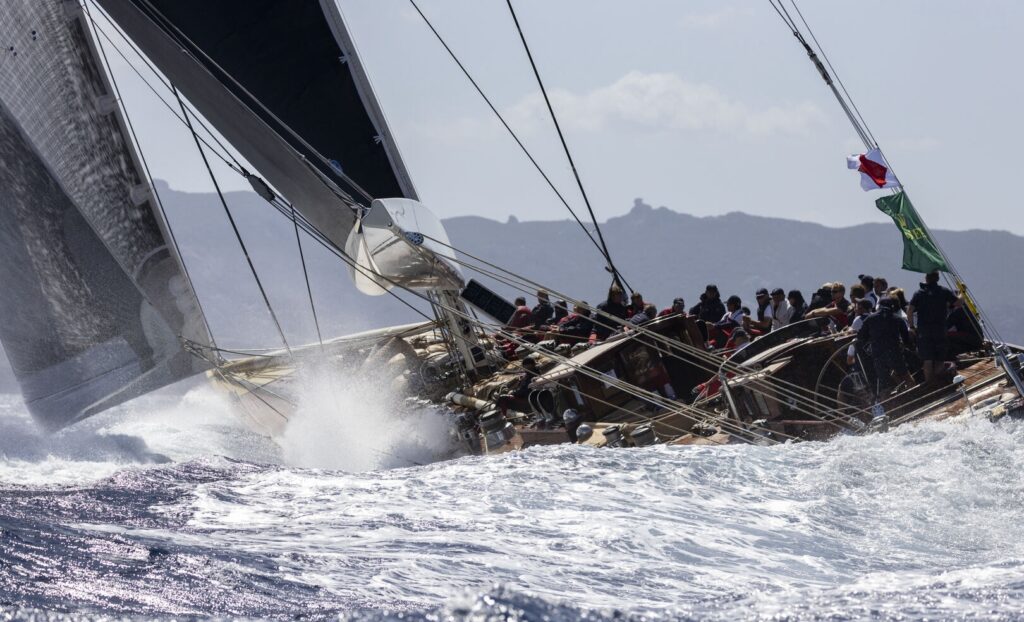
Although under the Universal Rule the J class was the actual America’s Cup class in 1930-1937, Velsheda never raced for the America’s Cup. She did, however, successfully race in her homewaters of England in 1933-1936 against Britannia, as well as Cup challengers Endeavour and Shamrock.
The yacht is named in honour of the owner’s three daughters, Velma, Sheila and Daphne. Velsheda embodied the latest design technology of the time. Her aluminium mast was made by bending and riveting plates, the sails were made of terylene and standing rigging was solid rod.
Compared to other J Class yachts of her time, Velsheda was 6 feet 4 inches longer than Enterprise and nearly 7 feet longer than Shamrock V, the predecessor designed by Welshed Nicholson.
The years 1937 to 1984 were ‘stagnant’ for the yacht: she was moored at Hamble. Fortunately, in 1984 Velsheda was bought by Terry Brabant who carried out a basic refit which included fitting a steel mast and basic interior. Velsheda sailed mainly around the south coast of England, occasionally sailing in the Mediterranean and once in the Caribbean. She was then bought by a Swiss owner who began refurbishment but was unable to continue funding the programme.
In 1996, the yacht was purchased by the current owner in Gosport, where she was originally built, and underwent a comprehensive refit under the direction of Dykstra Naval Architects of Southampton Yacht Services.
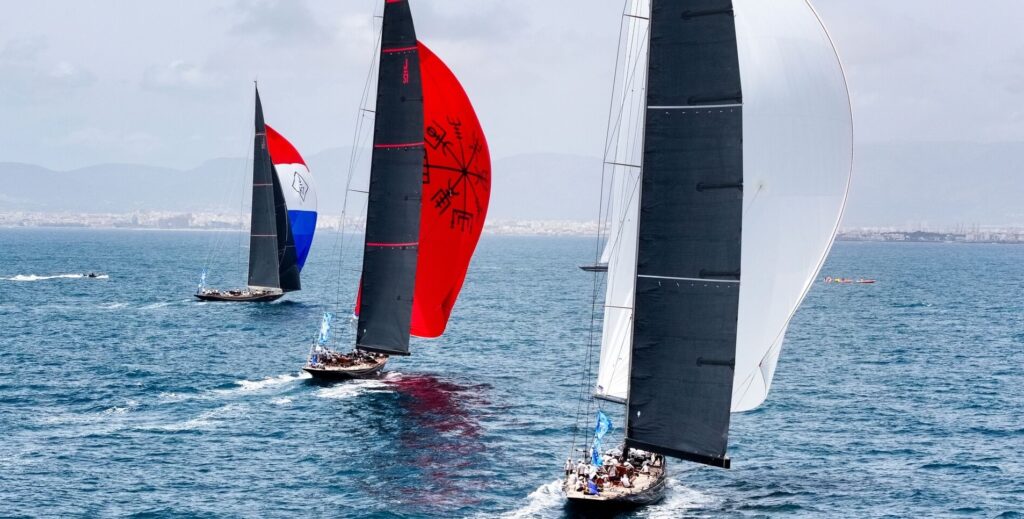
Photo: Sailing Energy / The Superyacht Cup
Velsheda was re-launched in November 1997 and since then has ‘led an active life’, racing with great success in Europe and the Caribbean. Since 2000, her owner has been one of the main initiators of the restoration and promotion of the J-Class Association.
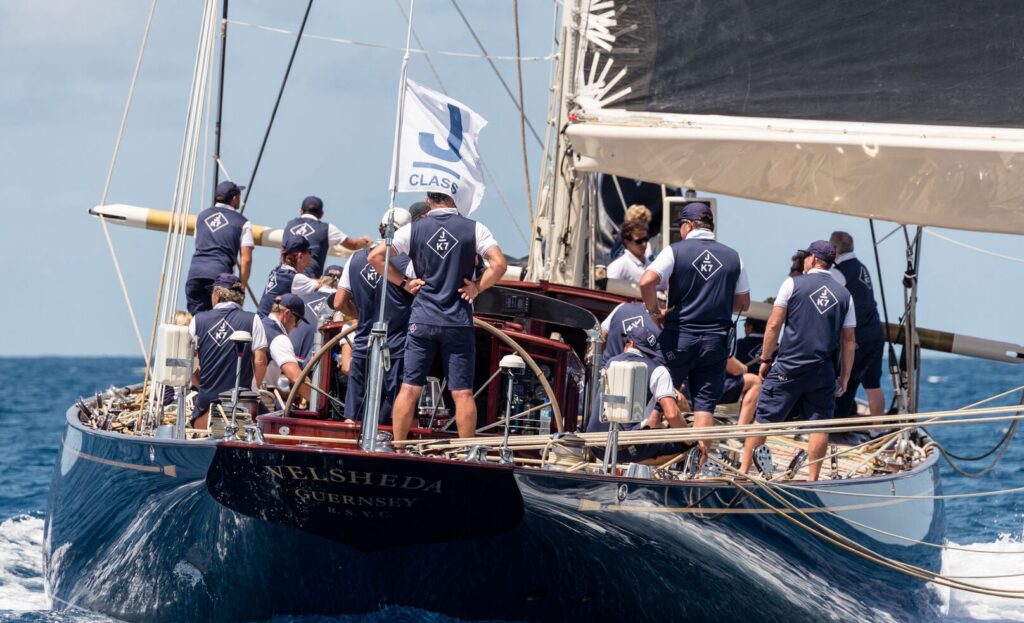
Velsheda has been operated by the same core racing team for many years and has long been regarded as a benchmark in terms of boat handling. Despite the boat’s inherent disadvantages such as not being able to carry the same rig tension as the modern replicas, she remains very competitive. Velsheda has won her class in St Barts, Antigua, the Maxi Yacht Rolex Cup and Les Voiles de Saint Tropez.
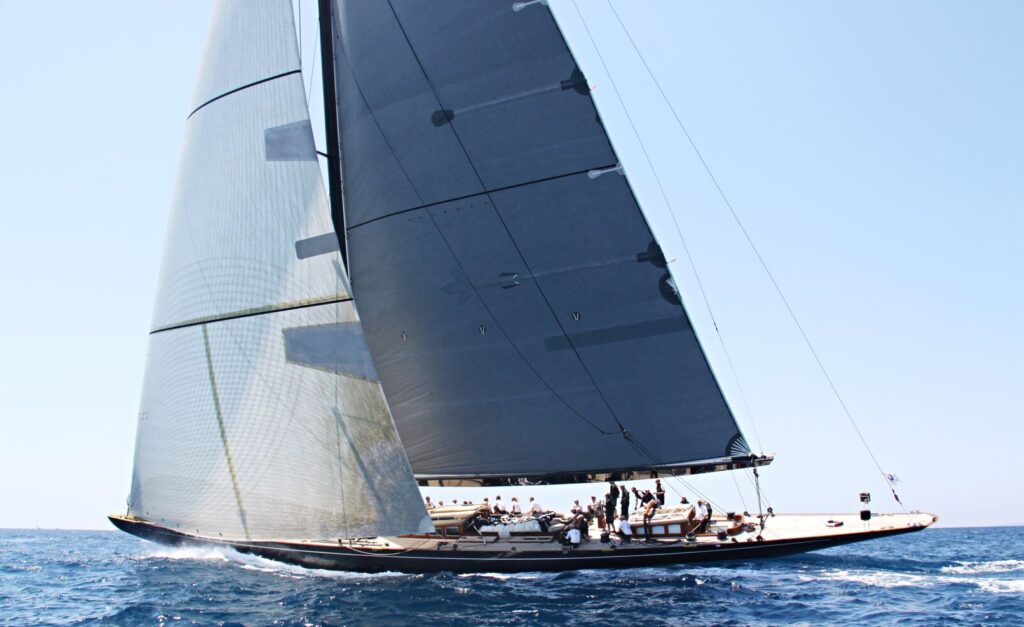
The owner of the yacht is one of the most experienced and skilled helmsmen in the fleet. He is surrounded by a crew made up of Kiwis and Brits. Veteran Tom Dodson is tactician and Grant Simmer is navigator, recently supported by British Olympian Andy Beadsworth as strategist.
Velsheda has a steel hull and wooden superstructure. The yacht can accommodate up to 10 guests and 7 crew members including the captain. The yacht is equipped with 1 MTU engine which gives her a maximum speed of 11 knots.
Svea
Svea is the newest J Class yacht in the current fleet, launched in January 2017. Svea is also the longest J Class yacht with a length of 43.6 metres.
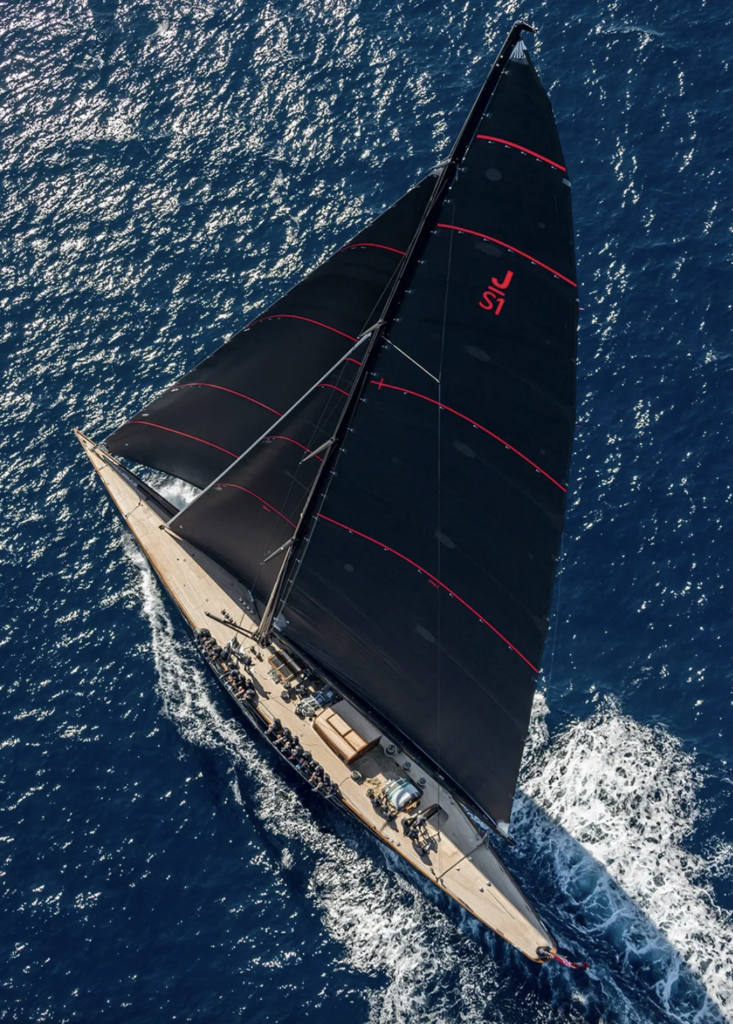
The original drawings of the yacht were developed in 1937 by the Swedish Olympian and famous designer of 6 and 8 metre yachts Tore Holm together with his compatriot Gustav Plym. Because of the War, the participation in the America’s Cup never took place. The designs lay in a desk drawer for a long time until they were discovered by John Lammerts van Bueren, a Dutch yachting historian and 8 metre enthusiast.
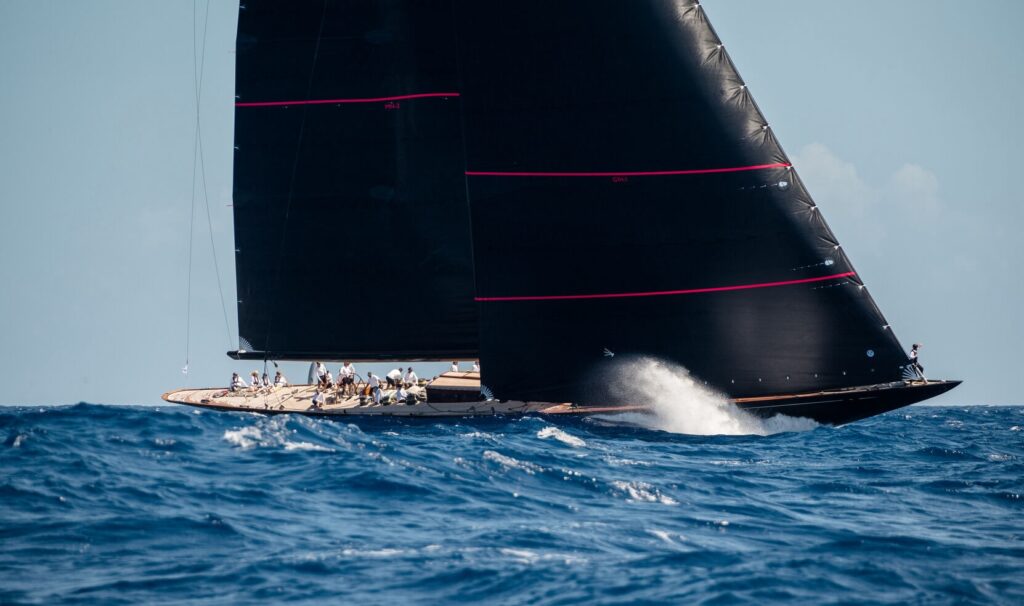
Designer Andre Hoek and a group of Dutch enthusiasts, including the then-owner, bought the designs, and after careful analysis and refinement according to their VPP modelling, the hull and deck were built. However, the owner abandoned the project.
The project was bought by a new American owner who, after sailing four other J Class yachts, wanted to compete in the 2017 America’s Cup and the inaugural J Class World Championship in Newport the same year.
Hoek Design Naval Architects, which worked on Svea, used the original drawings for the design. In doing so, they updated the 75-year-old design with an aluminium hull and a 53.75-metre-long carbon fibre mainmast.
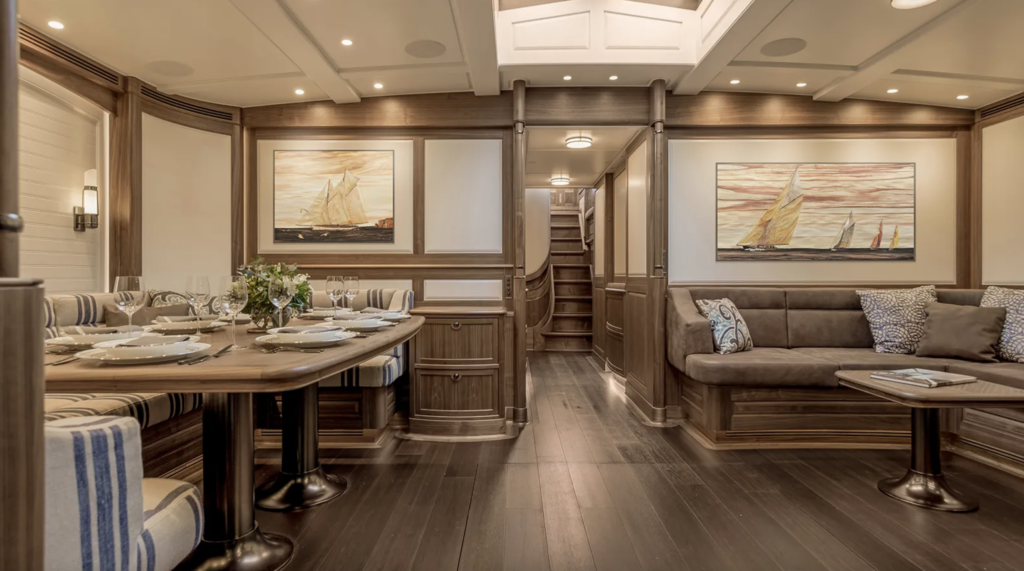
While two halves of the hull and deck were built at Claasens shipyard, construction was completed at Vitters shipyard on a very tight schedule in order to make it to Bermuda in time for the J Class America’s Cup regatta.
Svea combines powerful traditional lines complemented by the latest racing boat technology. The yacht has a very low freeboard, an extremely neat deck layout and a particularly low boom. A distinctive feature is the very large wheel mounted in a deep recess.
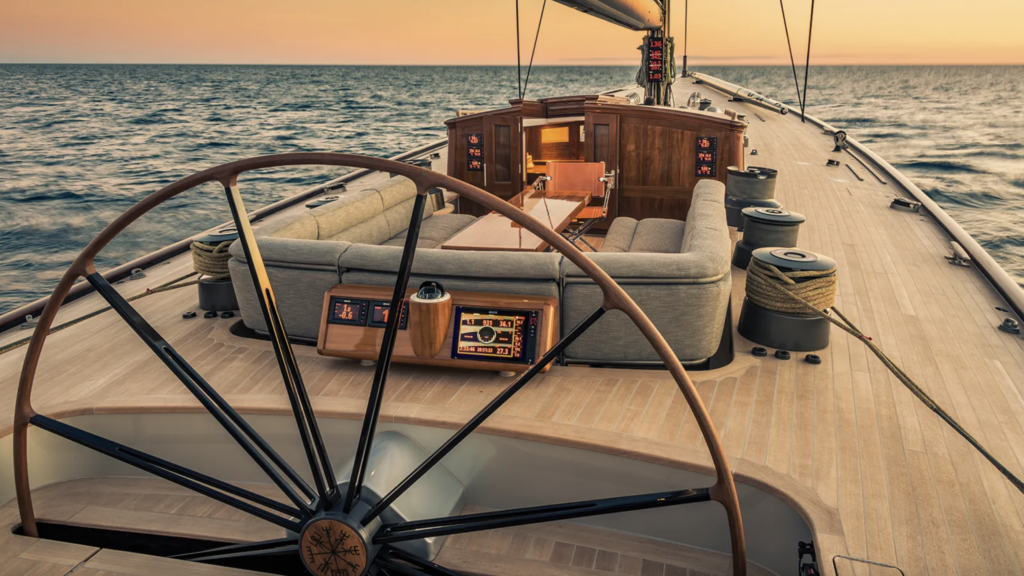
Svea first raced in 2017 in Bermuda as part of the America’s Cup Superyacht Regatta. In 2018, after changes to the keel, lengthening the boom, enlarging the mainsail and reducing the jib, Svea won the class at the 2018 Saint Barths Bucket Regatta.
In 2022, Svea passed into the hands of two experienced Swedish sailors who were inspired to bring Svea (which translates to ‘Mother Sweden’) under the Swedish flag.
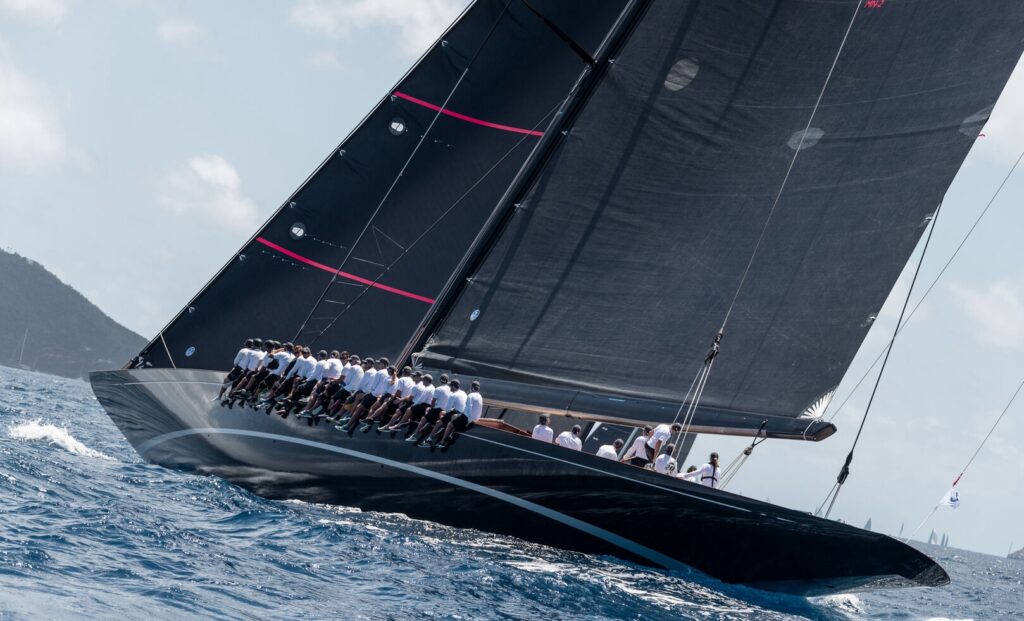
After a short and intensive week of training under the guidance of tactician Bouwe Bekking, Svea proved her speed and power at two major regattas that year, winning The Superyacht Cup Palma in June 2022 and then taking the class title at the Maxi Yacht Rolex Cup.
Svea is driven by the owners at the event, who share helmsman duties. Seven-time round-the-world racer Bouwe Bekking is the tactician, Steve Hayles is the navigator and Tim Powell is the project manager and is responsible for setting the lines.
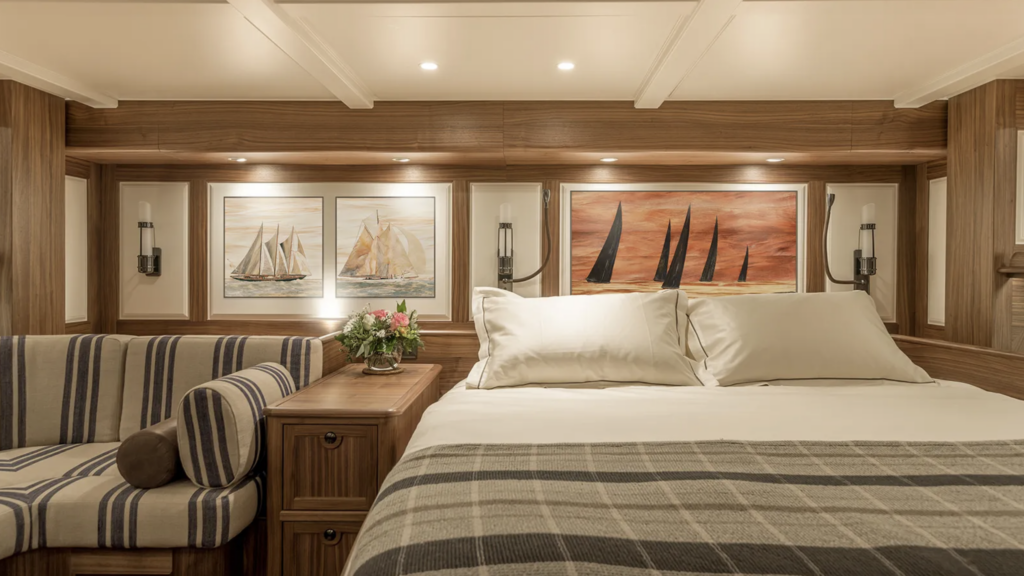
The yacht has a maximum speed of 11 knots and a cruising speed of 10 knots. The yacht can accommodate up to 6 guests in 3 cabins and 7 crew members. The yacht has a beam of 6.63 metres.